Jeremi Suri


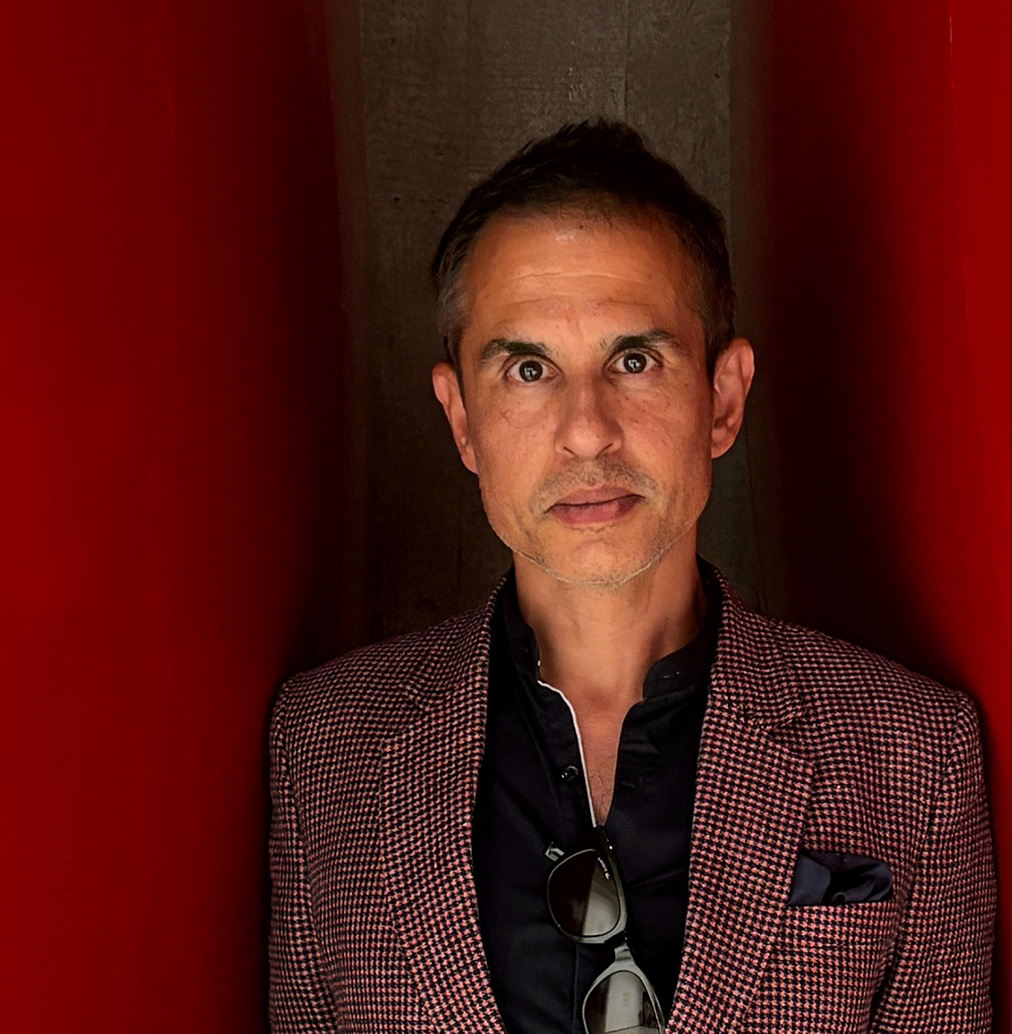
Jeremi Suri is one of the nation’s leading voices on democracy, leadership, and global affairs. He holds the Mack Brown Distinguished Chair for Leadership in Global Affairs at the University of Texas at Austin, where he is a professor in the Department of History and the LBJ School of Public Affairs.
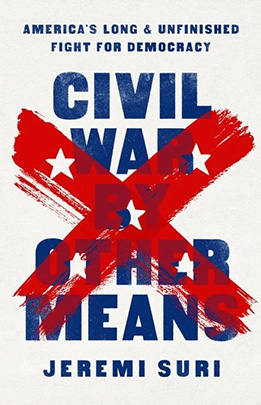
Suri is the author and editor of eleven acclaimed books on American politics and foreign policy. His influential works—Civil War By Other Means, The Impossible Presidency, Liberty’s Surest Guardian, Henry Kissinger and the American Century, and Power and Protest—provide an exciting new take on the evolution of leadership, governance, and global power.
A remowned historian and commentator, Suri’s analysis appears regularly in The New York Times, The Washington Post, The Wall Street Journal, The Atlantic, Time, Newsweek, Foreign Affairs, and Foreign Policy. He is also a frequent guest on national radio and television, insightfully addressing today’s most pressing political and international challenges.
An engaging and accessible speaker, Suri connects history to the present, offering us a deeper understanding of democracy’s ongoing struggles and the qualities required for effective leadership in uncertain times. He has earned numerous honors, including the President’s Associates Teaching Excellence Award from the University of Texas and the Pro Bene Meritis Award for Contributions to the Liberal Arts.
Suri is also the host of the weekly podcast This is Democracy and author of the daily newsletter Democracy of Hope, where he continues to explore the ideas, values, and leadership needed to sustain democratic societies.
Topics
Understanding War in the Middle East
For more than a century, the Middle East has been a cockpit for great power war. Empires were born and died in this difficult region. With the emergence of oil, the global economy became dependent on the Middle East. This lecture will explore this history and analyze realistic expectations for the current conflict.
History tells us that war in Iran will not end quickly, nor will the pre-war status quo return. We are likely to see more intensive great power conflict, including the U.S. and China, and we can certainly expect more insurgency and civil war.
How can governments and businesses manage these challenges? This lecture will point to possible pathways forward, emphasizing the roles for diplomacy and other forms of cooperation, even amidst continued conflict. Political leadership will be essential, and business will have to play the long game.

Using History To Become Better Leaders
Most business, military, and political leaders are highly trained in technical fields. They are rarely experts in history. Nonetheless, top leaders of organizations and governments look to history when they confront the most difficult challenges in their roles. They have to make highly consequential decisions in conditions of uncertainty with limited data. Leaders also have to anticipate how distant and diverse communities will react to their decisions. These are endeavors that require historical perspective which leaders know they need, but rarely know how to find.
This lecture will give leaders strategies for becoming more historically informed. It will show how leaders can ask the right questions, encourage the acquisition of necessary knowledge, and identify places where history is most helpful for their goals. The lecture will also help leaders to avoid the misuses of bad history by biased advisors. Effective leaders at the top of organizations can build organizational cultures that develop historical wisdom, which is essential to strategic success.
Western Civilization and Democracy
Modern democracy is a product of Western civilization, but it has also produced some of the most poignant criticisms of Western civilization. The traditions of free inquiry, private property, self-governance, and rule of law that slowly emerged over centuries stimulated a flowering of creativity and achievement. They drew in other cultures and traditions, which contributed to prosperity and re-shaping of society. The emergence of greater pluralism within Western civilization elicits tensions between the ever-wider perspectives and experiences, especially in times of economic insecurity.
This lecture will trace the evolution of modern Western civilization, explain its enormous contributions to human improvement, and discuss its limitations. We will see why self-governing citizens must promote Western civilization today, but also how they must encourage its continued adaptation to a rapidly changing world. Western civilization is strong and resilient because it is not stagnant or intolerant; it must remain flexible and open, innovative and inclusive. This lecture will explain how, drawing on history and contemporary analysis.
250 Years Since the Declaration of Independence: Lessons for Freedom
The Declaration of Independence announced a radical idea that changed the world: people should rule themselves and governments should reflect the will of the people. The document provided the foundation for American democracy, and it has reminded every generation to hold tight to representative government. Abraham Lincoln reminded Americans that they must have “government of the people, by the people, for the people.” Franklin Roosevelt emphasized “Four Freedoms” for everyone: freedom of speech and worship, freedom from want and fear.
Our country is at another crossroad in its history, and the Declaration of Independence provides guidance for a new generation. We must ask how we can make government more representative of all citizens? This involves voting and service. Citizens must feel that their voices matter, even if they are not rich and well-connected. We must find ways to enhance citizens engagement and participation. We must also show that government seeks to serve citizens, not the other way around. This is a living legacy and challenge from the Declaration of Independence.