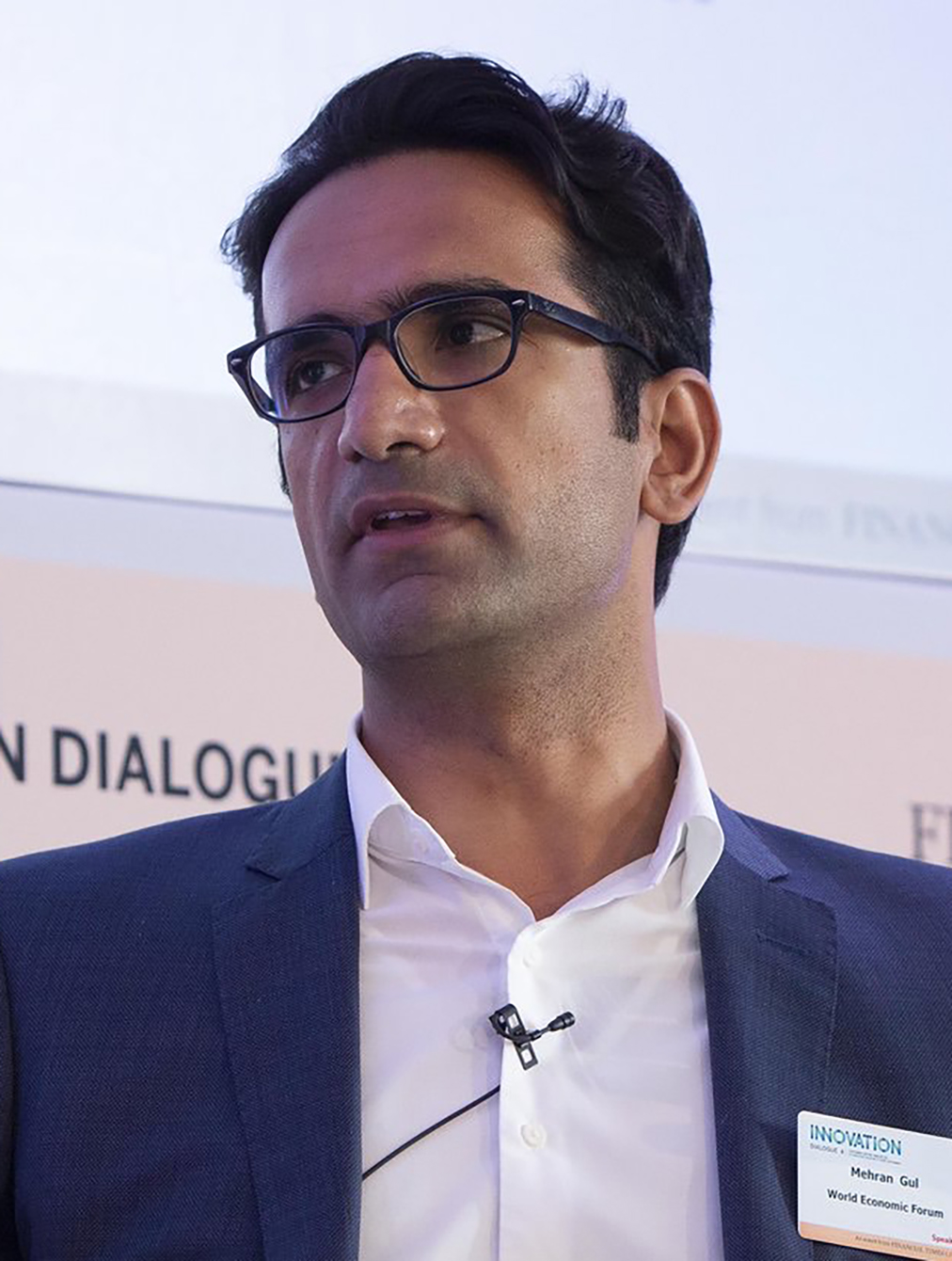
Carl Benedikt Frey


Carl Benedikt Frey is the Dieter Schwarz Associate Professor of AI & Work at the Oxford Internet Institute, University of Oxford, where he also serves as Director of the Future of Work Programme at the Oxford Martin School and is a Fellow of Mansfield College. Widely regarded as one of the world's leading economists on artificial intelligence, automation, and technological change, Frey advises governments and business leaders on how innovation is reshaping work, productivity, and economic growth.
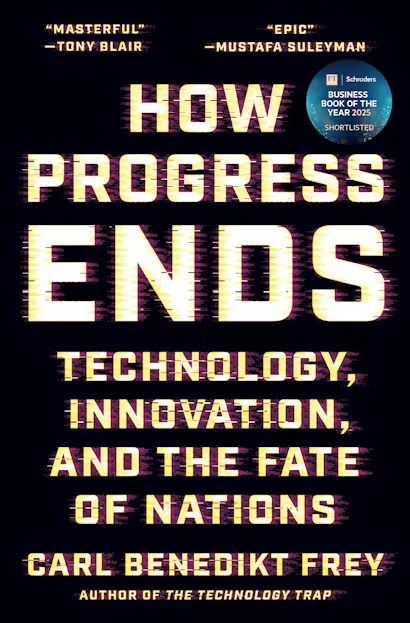
His latest book, How Progress Ends: Technology, Innovation, and the Fate of Nations (Princeton University Press, 2025), examines why technological progress is never guaranteed and how societies can foster innovation while avoiding economic stagnation. The book was shortlisted for the Financial Times & Schroders Business Book of the Year Award 2025, the 2026 Lionel Gelber Prize, and won the 2026 PROSE Award in Economics.
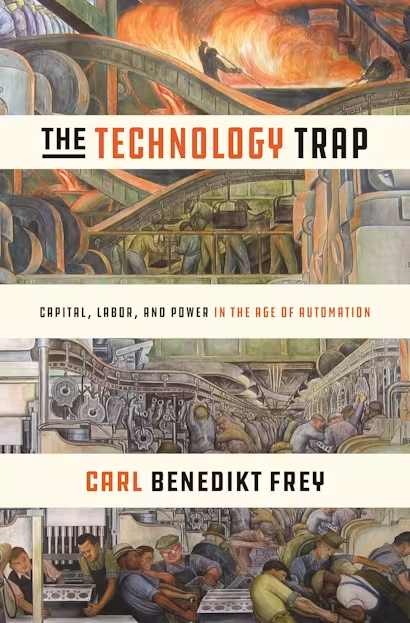
Frey is also the author of the acclaimed The Technology Trap: Capital, Labor, and Power in the Age of Automation, a Financial Times Best Book of the Year and recipient of Princeton University's prestigious Richard A. Lester Prize. His landmark 2013 study, The Future of Employment, co-authored with Michael A. Osborne, estimated that 47% of jobs were susceptible to automation. The paper has become one of the most influential works on the future of work, informing policymakers including the Obama White House, the OECD, the World Bank, and the Bank of England.
A trusted advisor to the G20, OECD, European Commission, United Nations, and numerous Fortune 500 companies, Frey has also served on the World Economic Forum's Global Future Council and the OECD-hosted Global Partnership on Artificial Intelligence (GPAI). His research and commentary regularly appear in the Financial Times, The Economist, The Wall Street Journal, Foreign Affairs, Scientific American, and The New York Times, while his insights are frequently featured by CNN, BBC, PBS NewsHour, and other international media.
Topics
AI and the Future of Cities
As AI automates high-end services, could New York and London face a Detroit-style shock? This talk identifies the likely winners and losers of the AI era—and distills what successful urban turnarounds got right

The Future of Globalization: From Manufacturing to Services
Globalization is shifting from goods to services, from factories to platforms. AI and remote work enable “virtual migration” and new forms of global competition. This talk explores how these changes reshape comparative advantage of nations around the world.
Work in the Age of AI: Which Jobs, Which Skills?
Automation is reshaping work—but people remain central. The question is where we add the most value. This talk maps which tasks AI complements vs. replaces, and how businesses can build a resilient workforce.
AI and Economic Growth: Lessons from History to the Present
How long until AI shows up in the productivity numbers? Lessons from electricity and IT show payoffs lag breakthroughs: diffusion takes time and firms must reorganize. This talk maps the bottlenecks and the concrete levers business and government can pull to turn promise into broad-based growth.
The Geopolitics of Technology
AI has become the frontline of geopolitical rivalry. The U.S. and China are racing for dominance in AI—while others, from Europe to Japan, seek to catch up. This talk examines how technological power is reshaping the world economy and what smaller players can do to stay competitive.
Restarting Economic Growth: What Policies Do Governments Need to Implement?
Despite rapid innovation, growth has slowed. Productivity has disappointed not only in Europe, but also in China and the United States. What would it take to restart it? This talk draws lessons from history—especially the post-war decades, when growth surged worldwide—to outline practical levers for restarting growth.
Videos
Articles

Podcasts
Testimonials