Jeremy Levin


Dr. Jeremy M. Levin is one of the biotechnology industry’s most respected leaders, with a career spanning global pharmaceuticals, biotech innovation, and public health advocacy. A physician, scientist, and executive, Levin currently serves as Executive Chairman of Ovid Therapeutics, a company focused on treatments for rare neurological disorders. He previously served as President and CEO of Teva Pharmaceutical Industries, one of the world’s largest generic drug manufacturers, and held senior leadership positions at Bristol Myers Squibb and Novartis. Levin also served as Chairman of the Biotechnology Innovation Organization (BIO), representing biotech companies and research institutions worldwide. He has been recognized as one of the industry’s most influential leaders and received the Albert Einstein Award for Leadership in Life Sciences.
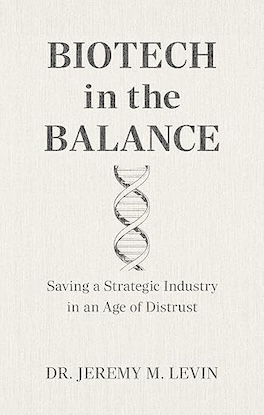
In his forthcoming book, Biotech in the Balance: Saving a Strategic Industry in an Age of Distrust (Rodin Books, May 19), Levin examines why prescription drug prices continue to rise despite rapid advances in medical innovation. Drawing on decades of firsthand experience, he argues that the American drug pricing system has become dominated by opaque networks of intermediaries, rebate agreements, and financial incentives that often reward higher prices rather than lower patient costs.
Levin explains how pharmacy benefit managers (PBMs) and complex rebate structures contribute to rising out-of-pocket expenses while limiting transparency for consumers and policymakers. He contends that the public debate has focused too heavily on pharmaceutical manufacturers while overlooking the hidden systems that shape pricing throughout the healthcare supply chain.
At the same time, Biotech in the Balance is not simply a critique of the industry. Levin offers practical reforms aimed at reducing patient costs while preserving America’s leadership in biomedical innovation. He outlines solutions to improve transparency, strengthen competition, and protect access to affordable medicines without undermining scientific progress or generic drug availability.
The book also addresses broader concerns about the future of U.S. biotechnology and pharmaceutical manufacturing. Levin warns that America risks becoming increasingly dependent on China for essential medicines if domestic manufacturing and scientific capacity continue to erode. He advocates for renewed investment in manufacturing, talent development, and advanced technologies such as AI-driven drug discovery.
Ultimately, Levin argues that restoring public trust is essential to the future of biotechnology. He emphasizes that innovation alone is not enough; long-term success requires ethical leadership, transparency, accountability, and a renewed commitment to patients and public health.